
Jebel Ali Port Berthing Guide
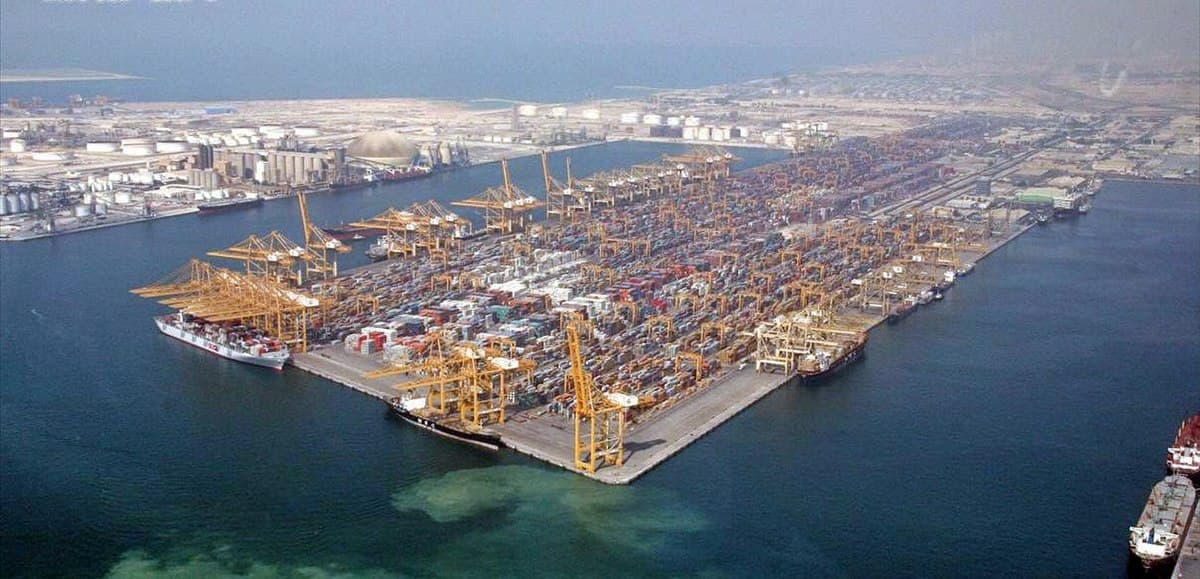
This guide on Jebel Ali Port is a rare and practical “field manual.”
It avoids empty theory and instead focuses on detailed, firsthand experiences and lessons learned from captains and crew. The article not only summarizes standard operating procedures but also reveals the unwritten rules and potential extortion risks during port inspections — along with concrete countermeasures and reliable information.
Whether you are a newcomer calling at this port for the first time or an experienced master seeking to optimize your operations, this article is highly valuable and worth saving.
I. Communication and Pilotage
1. General: Jebel Ali is a large international transshipment port with many terminals, usually direct berthing. The Pilot Station is 30 nautical miles away. Contact Port Control via VHF Channel 69 to request pilotage. They will inform you when and where (e.g., “XXXX time at Buoy XX”) to take the pilot. The pilot boards on the north side of the channel; vessels must not enter the channel before the pilot embarks. For deep-draft or fully loaded ships, pilots board at the channel entrance.
2. Pilotage Details: Port Control will guide you before pilot boarding. Pilots come from various countries — competent, professional, and polite; no one asks for gifts. Pilot boats are modern and fast; pilot ladder position: 2 meters above waterline. Tugs are modern and maneuverable, positioned before the breakwater and use towing lines properly.
3. Light-Draft Vessels: Vessels with shallow drafts also embark/disembark pilots on the north side of the channel. Multiple ships may operate simultaneously — coordinate carefully.
4. Current: Crosscurrents are generally weak, typically under 1 knot, confirmed with pilots during experience exchanges.
5. Buoys 7–9 Area: Charts may show uncertain depth marks or separation lines — pilots say these are meaningless, and ships routinely pass without issue.
6. Caution: When waiting outside the channel for pilot boarding, outgoing ships may suddenly turn right and exit — ensure proper coordination.
7. Departure Pilot: Pilots board from the shore side, disembarking just after clearing the breakwater. You can negotiate slightly earlier or later departures with the pilot.
II. Pre-Arrival Documents and Port Entry Procedures
1. Important Note: The last port clearance must clearly state JEBEL ALI PORT, U.A.E. (Make sure to inform the previous port agent in advance.)
2. HA Border Security – Crew List Form: A tricky form; best to get a sample from your local agent. Fill in the following: TYPE: C BATCH: APP DIRECTION: I VESSEL: IMO Number Departure Port: previous port code Arrival Port: AEJEA (code for Jebel Ali) Column D (Document Sub-Type): Captain = “M”, Crew = “S” Column M (Travel Type): All “N” Usually, the agent fills and submits it, so you can just send your version — not critical.
3. Required on Arrival: - All crew Seaman’s Books and Passports - Port Clearance from the previous port (if electronic, print in color) - Certificate of Registry - Crew List (special Jebel Ali format) - A simple form filled on-site
4. “Emergency & Pollution Letter” Issued by the agent — includes current onboard quantities. All items except bunker figures should be pre-filled. Pilots need these figures before berthing.
5. Personal Items: No restrictions on personal tobacco or alcohol; bonded stores remain unsealed.
6. Procedures: Very straightforward — only need seaman books, passports, clearance, crew list, and registry copy.
7. Shipboard Agent: A resident agent will stay onboard to handle discharge, documentation, etc. — similar to a loading master.
8. Departure Procedure: Managed by the resident agent. Usually completed within 10 minutes after cargo completion (since the departure clearance is pre-arranged). Obtain the departure clearance number before calling Port Control for “All ready for sailing.” Sometimes pilots are delayed — examples include 1–2 hour delays. If pilot boarding is late, remind Port Control every hour.
9. Departure Documents: The agent emails the necessary departure documents. Simply modify the arrival forms to “departure” status and update times. Always check email promptly — failure to submit 24 hours in advance can delay departure.
III. Cargo Discharge Operations
1. General: Shore labor is efficient and well-organized; port machinery is abundant. Cargo is unloaded directly to yard by forklift. However, lighting requirements are strict — minimum 4 deck lights per hold, sometimes 6, or they stop work. If cranes trip or power fails, stevedores wait silently — be alert. No dedicated safety officers wandering around trying to find faults.
2. Incidents: Some damaged steel sheets slid between cargo gaps; stevedores refused to unload, and crew had to manually retrieve them. For deck cargo extending beyond hatch coamings, must be discharged first and reloaded after cargo completion. Captain must email a written statement (e.g., “Any damage during reloading not ship’s responsibility”). Resident agent promptly reports serious damages; minor damages may only appear in post-operation reports for chief officer confirmation.
3. Surveillance: Tall lighting towers equipped with HD cameras; all activity monitored. Anything not permitted must be formally requested and approved — don’t act without permission.
IV. PSC-Type Inspections (Port Safety Checks)
1. Repairs: Any onboard repair (e.g., radio, machinery) must be pre-approved through the agent. “Port Safety Inspectors” can be troublesome — extortion is common. For example, a radio repair done during office hours led to a $400 bribe demand in 2018 for lack of prior notice.
2. System and Fines: Similar to PSC (Port State Control). Detected deficiencies result in fines imposed on the agent, who then recovers them from the shipowner. Re-inspection fees also apply. Reports are emailed instantly to the agent and copied to the vessel. Without clearance of deficiencies, the departure permit will not be issued.
Example: In 2020, an inspector arrived two hours before sailing, demanded $300, settled for $200. The inspector had previously served as 3/O, C/O, and with a classification society — capable of finding serious issues if resisted. Detentions can cost up to $10,000 to “resolve.”
3. Other Experiences: One vessel was checked for ID cards, engine room helmets, garbage and oil record books — no bribes demanded. Another vessel fined $4,000 for “black smoke from funnel.” Local officials sometimes invent fines; failure to pay means no departure clearance. Attempts to dispute often lead to even higher penalties.
V. Miscellaneous
1. Shore Leave: Tours and shopping in Dubai can still be arranged through the agent. Official shore pass: USD 100 per person; unofficial/private: USD 50 each.
2. Communication: Mobile network signals in the port are decent.
3. Flag Etiquette: The UAE national flag should be raised during the day and lowered at night.
Source: Captain's Experience Date: October 6, 2025