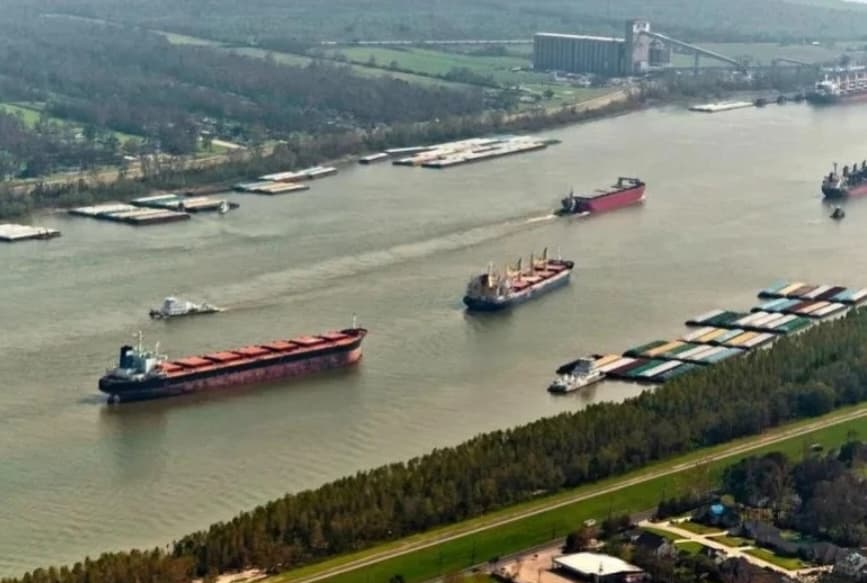
美国对委内瑞拉原油销售的限制框架调整预计将推高美国的进口量。 在1月9日美国重要石油公司高层于白宫会面讨论美国计划供应多达5000万桶委内原油至美国买家后,托克(Trafigura)及维多(Vitol)高管表示已准备开始销售委内瑞拉原油。他们在与美国总统特朗普电视直播会议中宣称,已获得美国颁发的豁免许可证,从而可以销售委内瑞拉原油。托克首席执行官Richard Holtum表示,将装运首批货物,但目的地暂未公布。 据船运搜索机构TankerTrackers.com,美国拘押马杜罗以来,暂无任何影子船队油轮装运委内瑞拉原油。这表明美国对此类油轮包括在加勒比海扣押第五艘油轮在内的打击行动持续阻止在委内瑞拉海域的此类非法行为。 油轮经纪公司Odin表示,特朗普宣称多达5000万桶委内瑞拉原油将直接运往美湾,正式标志此前以影子船队油轮至亚洲出口的迅速转向。该变化或将提升亚洲对仍然供应充足且价格具有竞争力的伊朗及俄罗斯原油的需求。 船运数据显示,两艘由雪佛龙(Chevron)运营且装载委内瑞拉原油的油轮预计将于1月中旬抵达美国得克萨斯州,这两艘油轮于1月5日在Jose码头装运原油后,已于1月7日离开委内瑞拉。 美国政府已开始逐步解除禁止委内瑞拉原油销售的制裁,但仍对出口目的地进行管控。作为首要条件,美国财政部制裁执法机构外国资产控制办公室(OFAC)须解除制裁,该制裁自去年以来仅允许雪佛龙进口有限的委内瑞拉原油。雪佛龙在12月自委内瑞拉进口了12万桶/日的原油。 据消息人士透露,OFAC已向一家全球贸易公司颁发了许可证,允许其恢复采购委内瑞拉原油。美国Philips 66上周曾表示,委内瑞拉原油流向变化在短期内或使美湾沿岸炼厂受益。
I. Pre-Arrival at the Canal 1. 4 Days Before Arrival: Vessels must send a message to the agent to apply and book canal transit. The message content should include: (Omitted here, refer to agent's required message format). 2. 48 Hours Before Arrival: Send an Arrival Notice to the agent. The notice should contain: (Omitted here, refer to agent's required message format). 3. 24 Hours Before Arrival: Send the following security information directly to the Suez Canal Authority (This must be sent directly by the vessel, not via the agent): (Omitted here, refer to agent's required message format). II. Arrival and Reporting 1. Vessel Classification: Vessels are divided into two groups: "tanker group" and "ordinary group". * The "tanker group" includes: VLCCs, large bulk carriers, 3rd/4th generation container ships, barge carriers (over 35,000 Suez Gross Tons), LNG/LPG carriers, and vessels with a draft exceeding 38 feet. * All other vessels belong to the "ordinary group". 2. Northbound Vessels: * Arrival Line: "Tanker group": 29º42.8'N. "Ordinary group": 29º48.33'N. Crossing this line constitutes arrival. * Cut-off Times: "Tanker group": 0100 hours. Arrival between 0100-0300 incurs a 3% surcharge to join the day's convoy; arrival between 0300-0330 incurs a 5% surcharge. "Ordinary group": Cut-off is 0300 hours. Arrival between 0300-0330 incurs a 5% surcharge. After sending ETA to the Suez agent, the agent will inform the convoy joining time and final cut-off time. * Reporting: Northbound vessels should call "Suez Port Control" on VHF CH14 when 5 nm from No.1 buoy of the Suez outer TSS. For the "tanker group", Port Control will ask basic vessel particulars and usually assign an anchorage in the southern anchorage area (berths V1-V9) near "Conry Rock Buoy". For the "ordinary group", Port Control will require a second report at 2 nm from No.2 buoy, asking basic particulars, then assign an anchorage in the northern waiting area (28 berths) near "Conry Rock Buoy". * After Anchoring: Report anchorage position, anchoring time, which anchor used, and shackles of chain to Port Control. Inquire about pilot boarding time for the convoy anchorage. Sometimes, the pilot may board while the vessel is underway to the convoy anchorage. * Before Pilot Boards: Port Control will notify the pilot boarding time and request shortening the anchor chain to 2 shackles on deck. 3. Southbound Vessels: * Arrival Line: 31º28.7'N. Crossing this line constitutes arrival. * Convoys: Two convoys: N1 and N2. * N1 Convoy: Cut-off 1900 hours. Arrival 1900-2100: 3% surcharge. Arrival 2100-2200: 5% surcharge. * N2 Convoy: Cut-off 0300 hours. Arrival 0300-0400: 3% surcharge. Arrival 0400-0500: 5% surcharge. * N2 Restrictions: For safety, the following cannot join N2: Tankers carrying cargo with flashpoint <23°C, LPG, LNG, chemical tankers without double bottoms, vessels carrying Class 1 radioactive materials, heavy lift/semi-submersible vessels carrying loads exceeding crane safe working load, vessels with deck cargo exceeding maximum allowance, vessels over 90,000 Suez GT, warships, vessels with beam over 154 ft, vessels with draft over 42 ft. * Reporting: Southbound vessels call "Port Said Port Control" on VHF CH12 when 15 nm from Port Said entrance buoy. The "tanker group" is usually asked basic particulars and assigned to anchor in North Anchorage Zone 1 or 2 based on draft. The "ordinary group" is required to report again at 5 nm from the entrance buoy, asked basic particulars, and assigned to anchor in Zone 3, or proceed directly to pilot boarding for anchoring or mooring at Port Said. III. Canal Transit Procedures 1. Transit Documents: * Port Authority Documents: A. Master’s Declaration: Brought by the first pilot, filled by the Master, returned to pilot. B. Notice for Port Officer. C. Statistical Declaration. D. Information concerning a ship extracted from its official documents: Information about owners/charterers. E. Information concerning a vessel transiting Suez Canal: Crucial for toll calculation (Cargo Declaration). Ensure accuracy, mark unused sections "NIL". For example, annotate: "NO MILITARY CARGO, NO YACHT, NO DANGEROUS CARGO, NO CONTAINER", and state load/discharge ports. F. Declaration of State of Navigability. G. Declaration concerning use of double bottom tanks and lower parts of high tanks: Crucial for toll calculation (Oil Declaration). Tanks with >6 inches of oil are considered "FULL", otherwise "EMPTY". High tanks are calculated differently. Before transit, try to consolidate oils into high tanks. If no bunkering, state "NO BUNKERING IN SUEZ (PORT SAID)". If bunkering, declare quantities after bunkering and note "NO CHANGE AFTER BUNKERING". H. Ship in Ballast Declaration: If vessel is in ballast. I. Ship’s Report. * Agent Documents: (Agent: Gulf Agency Company - GAC) A. GAC Feedback Form: Vessel's feedback on the agent. B. GAC Egypt Motor Boat Receipt. * Documents to be Prepared by Ship: A. Certificate of Registry: Original + 2 copies. Get a receipt from the agent as it's taken ashore and returned before departure. B. Class Certificate: Not needed if vessel transited recently. C. Crew List: 6 copies. D. Cargo Manifest: 2 copies, Cargo Plan is acceptable. E. Port of Call List: 2 copies. F. Crew Vaccination List: 1 copy. G. Maritime Declaration of Health: 1 copy. * Documents for Inspection: A. Suez Canal Special Tonnage Certificate. B. Suez Canal Searchlight Certificate. C. Deratting/Exemption Certificate. D. Port Clearance from last port. E. ISSC. F. General Arrangement Plan: 2 copies. 2. Personnel Boarding (Besides Agent): 1. Quarantine Officers: Usually 2-3. Require Maritime Declaration of Health, Crew List, Port of Call List, Vaccination List. 2. Harbour Master: Checks draft, trim, anchor equipment, cargo gear, max/min manoeuvring speeds. 3. Canal Inspector: Requires cargo/oil declarations, crew list, port of call list, manifest/cargo plan, copy of Registry. Inspects Suez Tonnage Certificate, GA Plan, etc. 4. Canal Electrician: Inspects Suez Canal searchlight and connection. 5. Canal Mooring Men: Usually 3-4. 6. Canal Electrician: One required if vessel has its own Suez Canal light. 7. Canal Pilots: Usually 4-5 needed for transit. 8. Canal Police & Watchmen: May board sometimes. 9. Immigration/Customs: May board. Strictly control cigarettes/alcohol. IV. Transit Through the Canal 1. Arrival at Anchorage: Display quarantine signal (Flag Q by day, Red over White lights by night). Also display pilot signal (Flag 'G' under one black ball by day, 3 vertical white lights by night). Prepare gangway for officials/pilots. Install/searchlight ready for inspection. Prepare 6 floating mooring lines for shore, 2 wire tow lines for emergencies. Prepare 1-2 long messenger lines for mooring boats. 2. Convoy Schedule: * Northbound: Info broadcast by Port Control on VHF CH14 around 0300. Vessels should listen standby. First ship of convoy enters canal around 0600. Sometimes a second northbound convoy enters around 0100, anchors in Great Bitter Lake (GBL) waiting for southbound convoy, then joins the main northbound convoy. * Southbound N1: Info broadcast on VHF CH13/12 around 2100-2200. This convoy anchors in GBL, waits for northbound convoy to pass, then proceeds. * Southbound N2: Info broadcast on VHF CH13/12 around 0300. This convoy usually moors alongside at El-Ballah, sometimes anchors in Lake Timsah near Ismailia. Pilots are changed at Ismailia. 3. Transit Process: Transit formalities, mooring men/electrician boarding usually occur at anchorage or while entering. Before pilot boards, shorten chain to 2 shackles. After pilot boards, weigh anchor as instructed. Southbound vessels anchor in outer roadstead, weigh anchor as instructed, pick up pilot near HM150 buoy, and complete formalities while proceeding. Maintain distance from other vessels. Signal stations along the canal display passing times. Use VHF CH8 north of GBL, VHF CH10 south of GBL. Monitor VHF and check INMARSAT for messages from the Authority regarding navigation/convoys. * Northbound: First ship arrives Port Said eastern channel exit around 1700. Mooring men/electrician disembark, launch is retrieved, pilot disembarks, Master pilots out. Agent may return Registry and clear vessel here. * Southbound N1: First ship arrives canal exit around 1500. Retrieve launch/disembark mooring men/electrician, change to port pilot. Agent may board for clearance. Port pilot disembarks near New Port Rock after setting course. * Southbound N2: First ship arrives canal exit around 2200 (earlier if anchored in Timsah Lake). V. Other Notes 1. Control of Boarding: Strictly control personnel boarding. Officials/workers have photo ID cards. Prevent vendors from boarding as they are hard to remove and cause chaos. Post anti-theft watches forward and aft. Watchmen are not mandatory; vessel can decline their service and not sign their sheet. 2. Speed: Canal transit speed is about 7.5-8 knots, max short-term speed ~10 knots. Speed is a factor in convoy numbering. Report manoeuvring speeds carefully. 3. Pilots: After boarding in waiting anchorage, pilots may ask about vessel particulars and test the anchor (may use the other anchor in inner anchorage to check equipment). The entrance is congested with obstacles. Pilots often ask for gifts/cigarettes. Masters should monitor pilot's manoeuvring and remind if necessary. Can hint that good service leads to good gifts. 4. Pilot's Rest Room: Provide a comfortable room for pilots to rest. Lack thereof may lead to transit delays and extra fees (approx. 300 USD per pilot). 5. Signing Forms: When signing for the mooring boat, note if only one boat was used. When signing for the electrician, if the searchlight is ship's property, cross out the "rental" charge. 6. Cigarettes/Gifts: The Suez Canal is nicknamed the "Marlboro Canal". Stock up on Marlboro cigarettes. Most officials expect them. One inspector reportedly refused cigarettes, only taking a few tins of cooling oil. 7. Provisions: Vessels can arrange provisions in Suez. Many suppliers. Vegetable prices ~0.45 USD/kg, but meat/fish are expensive. Suppliers will radio the vessel before arrival. Contact agent if needed.